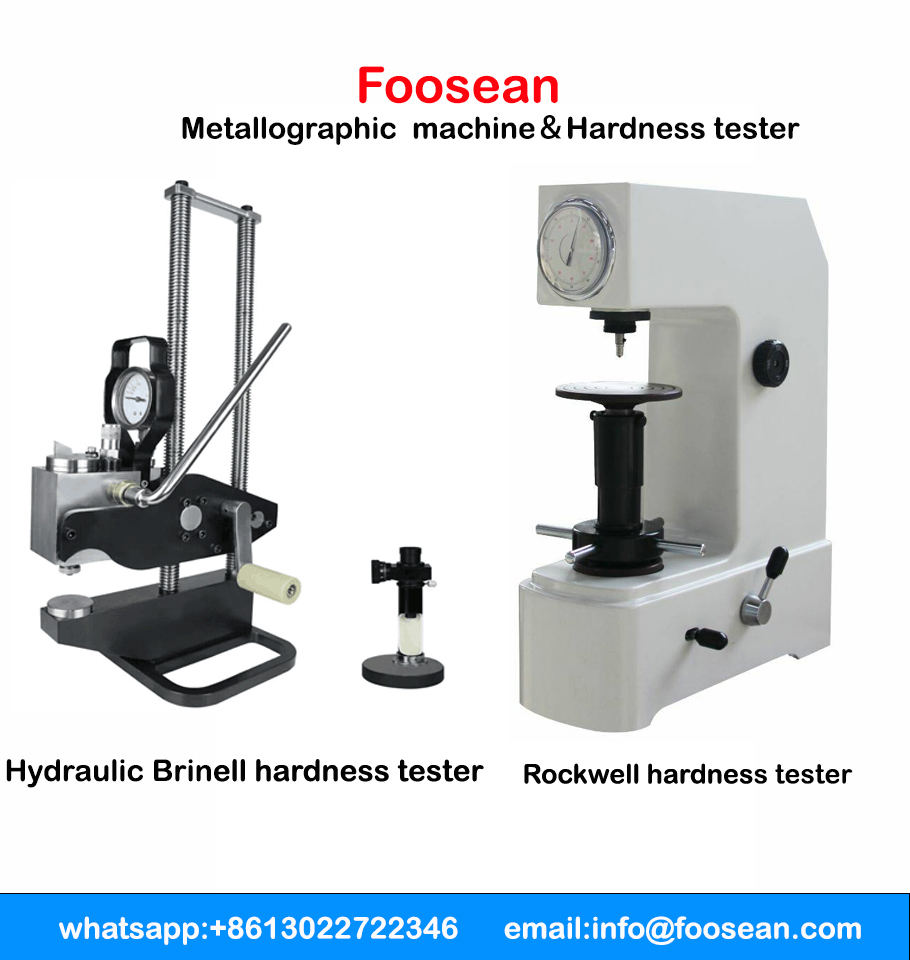
What Hardness Scales Can HR-150A Rockwell Hardness Tester Measure?
Read:3
The HR-150A Rockwell hardness tester is one of the most classic and widely used standard hardness testing equipment in industrial quality inspection and laboratory material testing. Many users are confused about the applicable hardness scales of the HR-150A model, resulting in incorrect scale selection and invalid test data. This article clearly sorts out all standard Rockwell hardness scales supported by the HR-150A Rockwell hardness tester, applicable material types, test principles and standard specifications, providing accurate scale selection guidance for heat treatment factories, mold processing plants and scientific research laboratories.
No other extended scales such as HRD, HRE, HRF, HRG are applicable to the standard HR-150A model. Users must select matching scales according to the actual material hardness range to ensure test accuracy and data validity.
2. Detailed Introduction of Applicable Scales & Test Materials
2.1 HRC Scale (Most Commonly Used)
HRC is the core scale of the HR-150A Rockwell hardness tester, adopting a diamond cone indenter and 150kg total test force. It is mainly used for high-hardness metal materials after heat treatment.
Applicable materials: Quenched steel, tempered steel, mold steel, tool steel, bearing steel, stainless steel, alloy structural steel, hardened mechanical parts and other high-strength metal workpieces.
Application scenarios: Heat treatment quality inspection, mold hardness testing, finished product hardness verification of high-hardness structural parts.
2.2 HRB Scale
The HRB scale adopts a 1.588mm steel ball indenter and 100kg total test force, suitable for medium and low-hardness annealed and soft metal materials, filling the detection gap of high-hardness HRC scale.
Applicable materials: Annealed carbon steel, mild steel, copper alloy, brass, aluminum alloy, bronze, low-hardness non-ferrous metal profiles and raw material blanks.
The HRA scale uses a diamond cone indenter and 60kg total test force, featuring small indentation and shallow pressing depth. It is suitable for high-hardness brittle materials and thin surface hardened layers that cannot be tested by HRC scale.
2.3 HRA Scale
The HRA scale uses a diamond cone indenter and 60kg total test force, featuring small indentation and shallow pressing depth. It is suitable for high-hardness brittle materials and thin surface hardened layers that cannot be tested by HRC scale.
Applicable materials: Cemented carbide, surface carburized layers, nitrided hardened layers, thin hardened steel sheets, hard brittle alloy materials.
Application scenarios: Surface heat treatment layer detection, cemented carbide tool hardness inspection, thin high-hardness workpiece testing.
3. HR-150A Scale Selection Rules & Precautions
High-hardness workpieces (≥20HRC): Priority to HRC scale, the most accurate and stable data for conventional heat-treated steel parts.
Medium and low-hardness soft metals (60-100HRB): Select HRB scale; HRC scale cannot detect soft metals effectively.
Thin hardened layers and hard brittle materials: Select HRA scale to avoid indentation penetration and substrate interference.
The HR-150A model does not support superficial Rockwell hardness scales. For thin sheets and ultra-low hardness materials, a digital Vickers hardness tester is recommended.
Strictly match the indenter and test force according to the selected scale to prevent systematic test errors.
4. Standard Compliance & Test Accuracy
The HR-150A Rockwell hardness tester’s HRC, HRB, HRA scale test results fully comply with GB/T 230.1, ISO 6508 and ASTM E18 standards. The indication error and repeatability are within the standard allowable tolerance range, with stable test force and high data consistency. It is the preferred conventional hardness testing equipment for industrial production lines and general laboratories.
FAQ
Q: Does HR-150A support HRD, HRE and other Rockwell scales?
A: No. The standard HR-150A model only supports three core scales: HRC, HRB and HRA. Extended superficial Rockwell scales are not applicable.
Q: Can aluminum alloy and brass be tested with HR-150A?
A: Yes. Medium and low-hardness non-ferrous metals such as aluminum alloy and brass are tested with the HRB scale, with stable and accurate data.
Q: Is HRC scale suitable for all heat-treated steel parts?
A: Yes. HRC is the standard scale for quenched and tempered steel, mold steel and bearing steel, covering almost all conventional high-hardness heat-treated workpieces.
Foosean HR-150A Rockwell hardness tester supports standard HRC, HRB, HRA three-scale testing, compliant with international and national standards. It features stable performance and simple operation, widely used in industrial quality inspection and laboratory metal hardness detection.